Castles & Palaces Across Borders - Historic Germany Castle Tours Private
Journey from Swabian fortresses to Swiss chateaux and Alsatian castles. Explore centuries of royal history, medieval power, and architectural ambition across three countries.
Where Borders Meet, Castles Tell Stories
Southwest Germany, Alsace, and Switzerland share centuries of castle-building ambition. Clifftop fortresses guarded trade, valley palaces displayed royal power, and some sites evolved from medieval strongholds into baroque residences. Each tells a different story of defense, wealth, and architectural change.
Our private castle tours go beyond postcard views. You learn why castles were built where they stand, who lived there, what they defended, and how they survived. Whether you dream of Neuschwanstein, Alsatian mountain fortresses, or Rhine Valley chateaux, we shape the experience with context and time to absorb it.
Practical Info
Understanding Castles vs. Palaces
Burg and Schloss: Two Words, Two Worlds
A Burg was built for defense—thick walls, strategic heights. A Schloss was built for living—grand halls, art, gardens. Some shifted from one to the other, like Heidelberg’s fortress-turned-palace-turned-romantic ruin. Southern Germany shows the full arc from Romanesque fortresses to baroque palaces to 19th-century revivals like Neuschwanstein and Hohenzollern.
Why This Region Matters
Geography That Demanded Fortification
The Rhine, Swabian Alb cliffs, and Vosges Mountains created strategic high ground and trade corridors. Castles cluster here because whoever held these points controlled wealth and security. We connect fortresses as a system—who allied, who rivaled, how borders shifted, and how architecture adapted.
Three Countries, One Architectural Language
German clifftop burgen, Alsatian mountain fortresses with French refinement, and Swiss lakeside chateaux each reflect local identity. With German, French, and English fluency, you get original-language insight at every stop, not just plaque summaries.
Royal Heritage: Three Castles, Three Stories
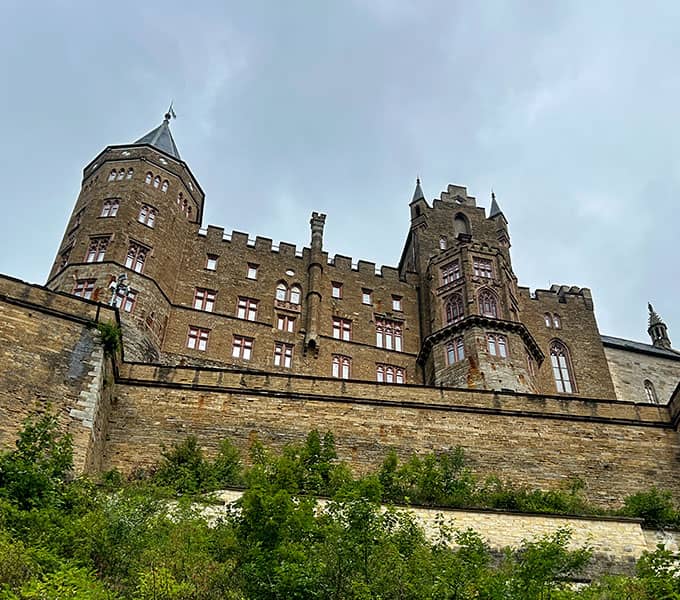
Hohenzollern Castle
Ancestral seat of the Prussian royal family
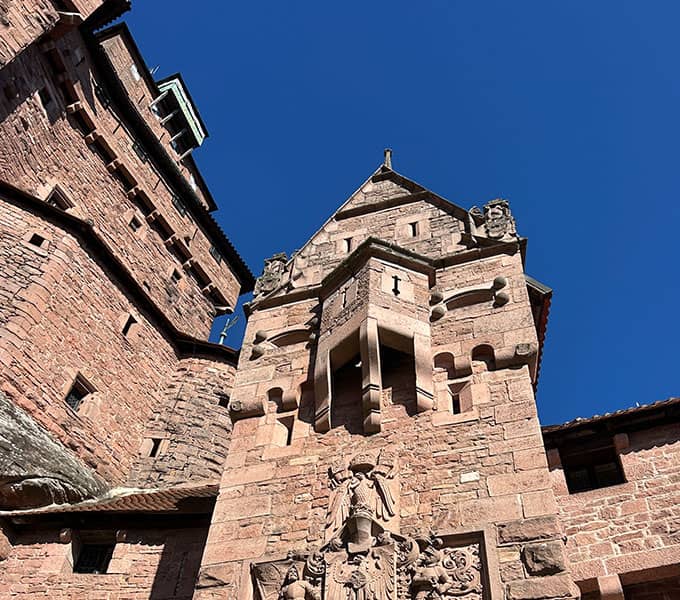
Chateau du Haut-Koenigsbourg
Mountain fortress over the Alsace plains
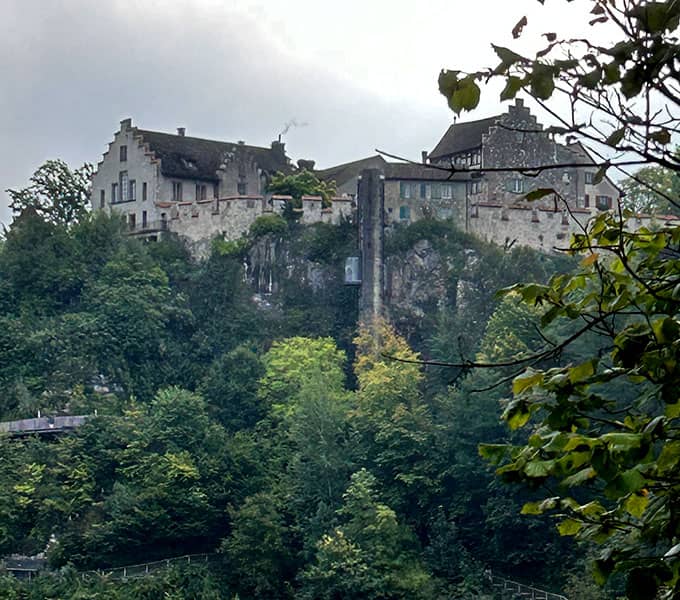
Laufen Castle
Fortress above the thundering Rhine Falls
Beyond the Big Three
Germany
- Neuschwanstein (with Hohenschwangau and Linderhof add-ons) timed to avoid peak queues.
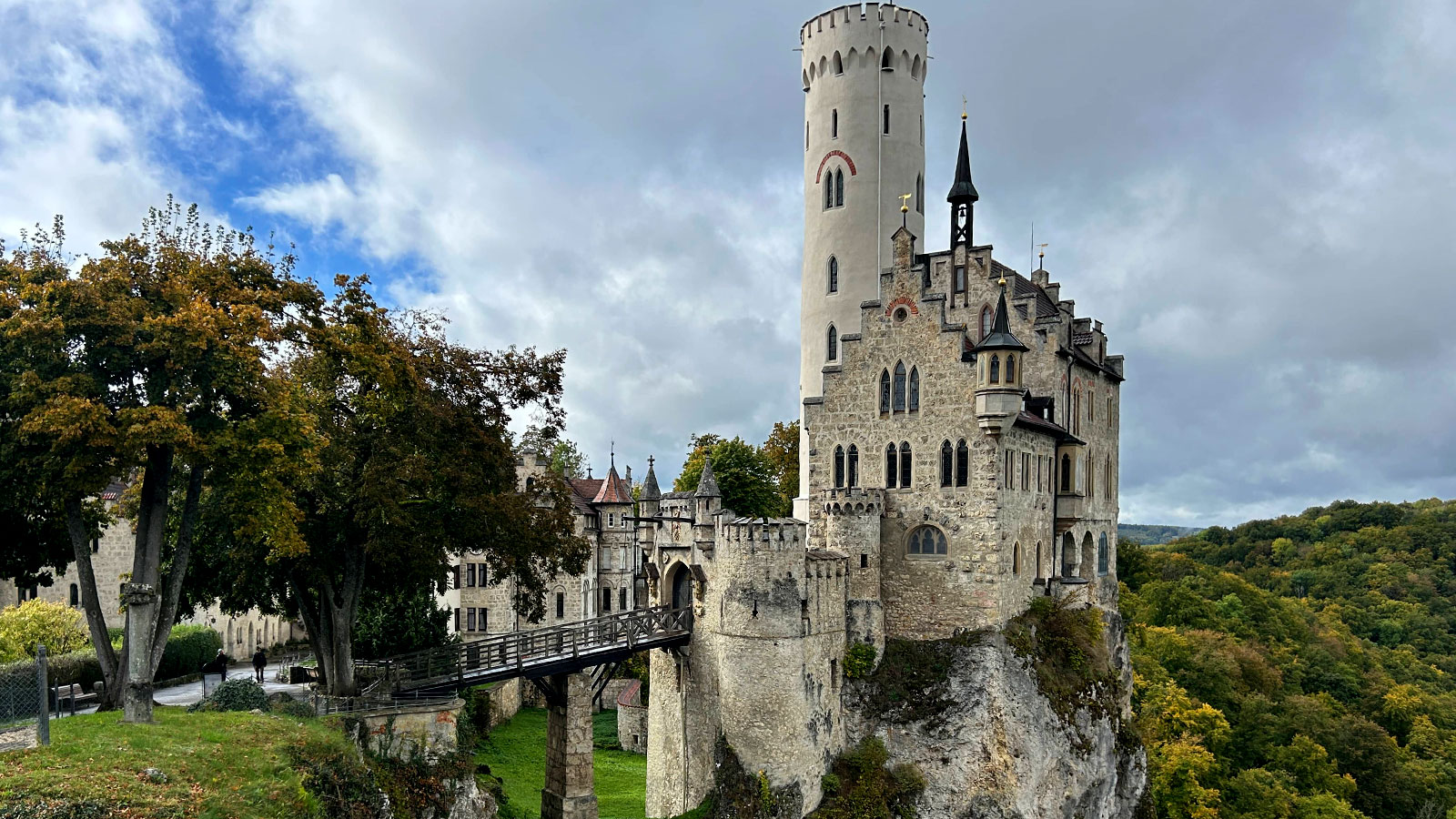
- Burg Lichtenstein: cliff-edge neo-Gothic with dramatic views.
- Heidelberg Castle: Renaissance ruin with Great Barrel and Apothecary Museum.
- Ludwigsburg Palace: 452-room baroque residence with museums and shifting garden styles.
- Rhine Valley: Marksburg, Burg Rheinstein, Burg Eltz combined strategically to dodge bottlenecks.
France (Alsace & beyond)
- Chateau de Fleckenstein: sandstone ruin with carved passages and big vistas.
- Chateau de Kintzheim: raptor sanctuary in a medieval fortress.
- Loire extensions: Chambord and Chenonceau for Renaissance palace contrast.
Switzerland
- Chateau de Chillon on Lake Geneva; dungeons and lakefront walls.
- Gruyeres Castle with cheese and chocolate pairings.
Castles as Experiences, Not Just Sightseeing
Overnight in Castle Hotels
Sleep inside historic walls: Schlosshotel Buehlerhoehe, Burg Hornberg, Chateau d'Isenbourg. We match luxury level to your preference.
Photography-Focused Visits
Sunrise mist at Hohenzollern, golden hour on Haut-Koenigsbourg sandstone, Rhine Falls spray framing Laufen. We build timing and vantage points around your shot list.
What Makes a Private Castle Tour Different
- Context over checklist: Strategy, architecture, daily life explained—not just room names.
- Timing that avoids crowds: Arrivals outside bus peaks, shoulder-hour access where possible.
- Border-crossing ease: Three countries in one journey without language or logistics friction.
Practical Planning
How long?
- Single-day: 2-3 castles in one region (e.g., Hohenzollern + Lichtenstein + Sigmaringen).
- Two-day: Cross-border (Swabian castles then Alsace + Rhine Falls).
- Three-day+: Rhine Valley, Bavarian palaces, Alsace fortresses, Swiss chateaux; castle-hotel overnights optional.
Best seasons: Spring bloom, summer full access (book early), autumn color, winter markets and snow for mood with some reduced hours.
Who This Is For
- History enthusiasts and architecture lovers from medieval to neo-Gothic.
- Photographers seeking dramatic landscapes and heritage structures.
- Travelers who want depth and fewer crowds.
- Anyone raised on fairy tales who wants to see their real-world sources.
Ready to Explore Royal History?
From Swabian fortresses to Alsatian strongholds, from baroque palaces to romantic ruins, these castles tell centuries of European history in stone. Tell us whether you prefer military precision, palace artistry, iconic photos, or lesser-known ruins, and we will design the right private route.
Request Your Castle Tour
Contact our team to secure your dates or customize this itinerary further.